(If you’ve ever logged in “just to see what’s happening,” stayed longer than you planned, and left feeling like you were part of something—you already understand the new loyalty model.)
For a long time, loyalty in casino-style gaming meant points, tiers, and accumulation. You played more, you climbed higher, and eventually—maybe—you unlocked something that felt meaningful.
But heading into 2026, that model is quietly being replaced.
Today, loyalty rarely feels like a ladder.
- It feels like:
- A room that’s already alive
- A familiar group of names you recognize
- A daily moment that’s “yours”
- An event you didn’t plan for—but don’t want to miss
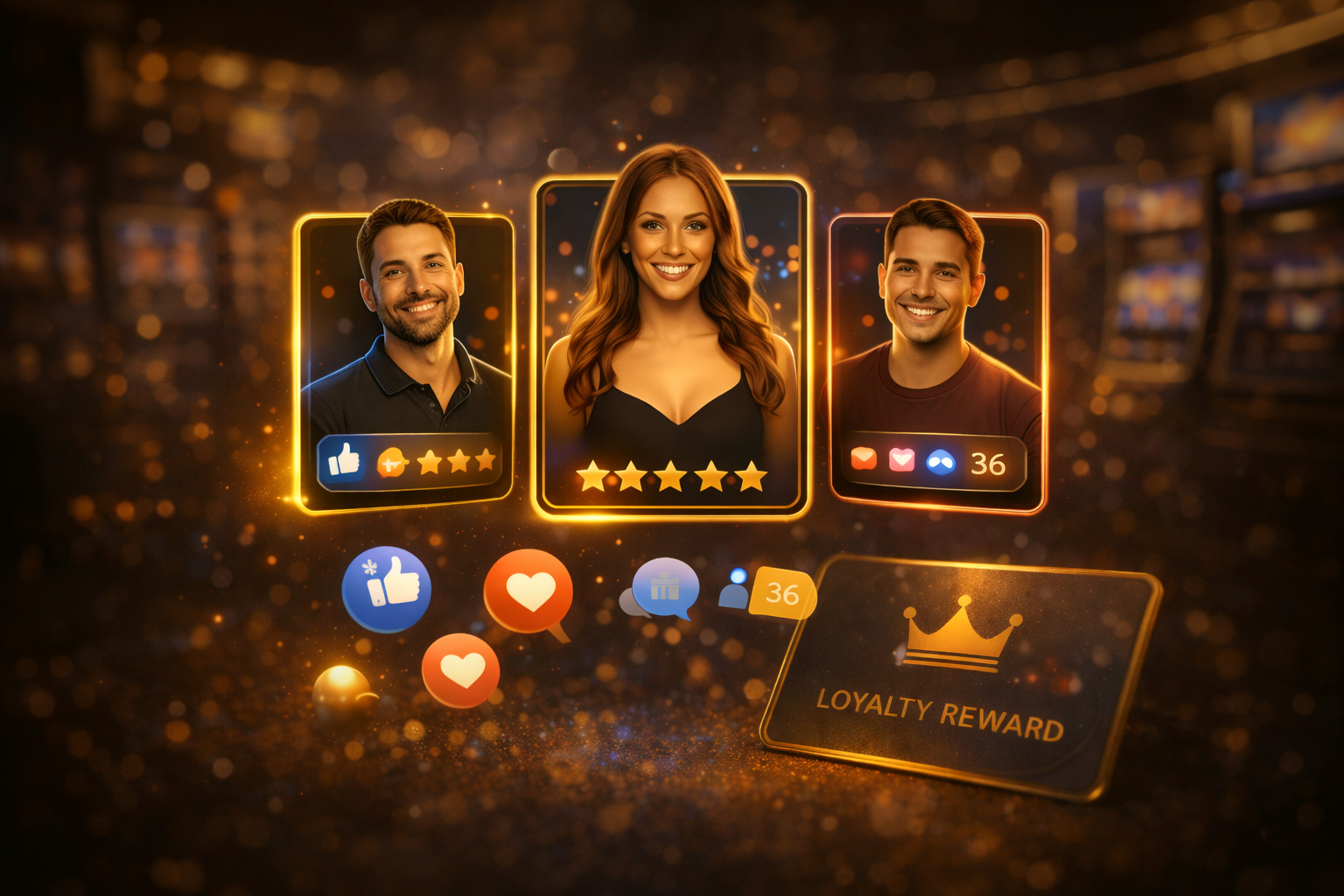
In other words, social features didn’t just enhance loyalty—they replaced it.
And they did it in a way most players didn’t even consciously notice.
Quick Orientation (If You Just Want the Basics)
- Old loyalty: Points, tiers, and long-term accumulation
- New loyalty: Live rooms, shared events, daily community rewards
- The real change: Players now return for connection and rhythm, not for rank
What Loyalty Used to Feel Like (And Why It Quietly Stopped Working)
- Traditional loyalty programs were built around patience:
- Accumulate points
- Maintain status
- Protect your tier
- Climb slowly
- For some players, that worked.
- But for the modern, casual, mobile-first player, it often felt:
- Slow
- Stressful
- Easy to “lose progress”
- Hard to feel rewarded in short sessions
Worse, it created what many players didn’t realize they were feeling:
tier anxiety — the pressure of “if I stop playing, I fall behind.”
That pressure works for grinders.
It quietly pushes casual players away.
The Shift Nobody Announced: From Earned Loyalty to Ambient Loyalty
Here’s the biggest unseen change happening right now:
We’re moving from earned loyalty to ambient loyalty.
Earned loyalty = “I’m loyal because I reached a tier.”
Ambient loyalty = “I’m loyal because this space feels familiar.”
- Ambient loyalty forms without effort:
- Same rooms
- Same time of day
- Same community rhythm
- Same recognizable faces
You don’t try to be loyal.
You just… return.
This is why social loyalty feels lighter and more natural.
It doesn’t ask for commitment upfront. It grows quietly in the background of your routine.
Why Social Rewards Work Even When They’re Small
Here’s something most platforms won’t openly admit:
In social loyalty systems, the reward itself is rarely the real incentive.
The real incentive is proof of presence.
- Small daily rewards work because they say:
- “You showed up.”
- “You were part of that moment.”
- “You were there with everyone else.”
- That feeling of being counted often matters more than the size of the reward.
- This is why:
- Tiny daily bonuses outperform massive delayed offers
- Participation beats accumulation
- Visibility beats status
The “Third Place” Effect: Why These Platforms Feel Different
In sociology, a third place is a space that isn’t home and isn’t work—but still feels familiar and social.
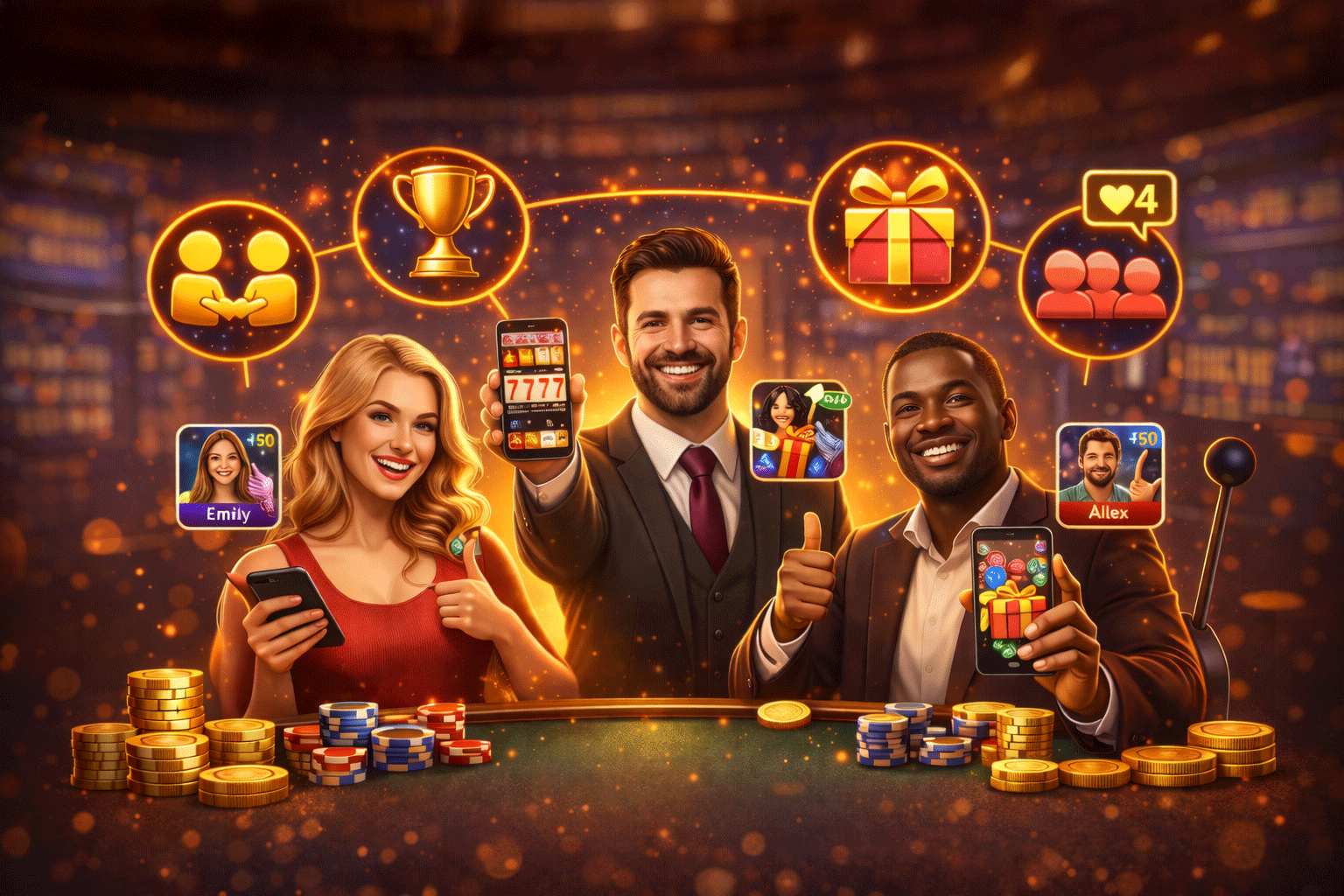
- For many players, modern social-first platforms now act as:
- A quick digital stop-in
- A place to check in without obligation
- A familiar background presence in the day
You don’t go there with a goal.
You go there because it feels inhabited.
And that’s exactly why the loyalty feels real.
The Hallway Effect of Live Rooms (Most Players Don’t Even Talk About This)
Here’s a behavior almost nobody writes about:
- Many players enter live rooms the same way they stand in the hallway at a party:
- They look inside first
- They feel the energy
- They decide whether to step in
- Or they simply move on
They’re not committing.
They’re orienting socially before participating.
- That browse-first behavior is exactly why
- Live rooms work for nav–info users
- Social loyalty feels safe
- Players don’t feel trapped inside decisions
Why This New Loyalty Model Feels Better for Casual Players
- Social loyalty works because it aligns with modern play patterns:
- Short sessions
- Mobile-first habits
- Drop-in behavior
- Flexible participation
Instead of:
“I need to keep up.”
It feels like:
“I’ll join when it feels right.”
That single emotional difference is why casual players stick around longer now than they ever did under tier-based systems.
What This Means for You Right Now
- If you’re browsing platforms and wondering what actually keeps people coming back, here’s the simple truth:
- People return for shared energy
- Familiar communities matter more than leaderboards
- Short social moments build stronger habits than long solo progress ladders
- Daily rhythm now beats long-term rank
This model isn’t built for someone who wants isolated, outcome-driven play.
It’s built for people who enjoy presence without pressure.
What Your First 3 Minutes Will Actually Feel Like With Social Loyalty
- On a modern social-first platform, your first few minutes usually look like this:
- You see what’s happening live right now
- You feel where the activity is
- You step into a room or shared game
- You receive a small participation reward just for being there
You’re included before you’re invested.
Platforms designed around this model—such as Jackpota—center live rooms, community events, and shared daily rewards as the primary loyalty layer. If you’re just exploring, you can step into something happening now and decide later how involved you want to be.
Why Social Loyalty Is Also Healthier
- Social-first loyalty removes many of the pressure traps of old systems:
- No falling behind
- No tier decay anxiety
- No requirement to grind
You participate because it’s enjoyable.
You leave because you’re done for the day.
You come back because it feels familiar—not because you’re afraid of losing status.
That’s a much healthier long-term rhythm.
What This Signals for 2026 and Beyond
- Looking ahead, three things are becoming clear:
- Loyalty will be event-driven, not accumulation-driven
- Community presence will matter more than rank positioning
- Platforms will compete on social atmosphere, not just reward size
Loyalty will feel less like something you build toward
and more like something you drop into whenever you choose.
Where This Leaves You Heading Into 2026
This shift is about more than gaming mechanics.
- It reflects what people now want from digital spaces:
- To feel welcomed without obligation
- To feel seen without performing
- To belong without pressure
- Social loyalty delivers that immediately.
Where to Go Next (If You’re Still Just Browsing and Deciding)
- If you want to feel the live energy, explore a live room
- If you’re curious about group momentum, check out tournaments
- If you like light daily rhythm, daily bonuses show how routine forms naturally
You don’t have to commit to anything upfront.
Look around. Step in when it feels right. Leave when you’re ready. Come back when it feels familiar again.
That’s what loyalty looks like now.